Adieu, and Be Well ... Broad Street is now closed.

Adieu, and Be Well … Broad Street is now closed.

One last time, and forever, we thank all of our contributors, our readers, our boards, and our editorial staff over the last almost-decade. We had a great run and published so much of which we are deeply proud. We started laying plans in 2011 with a dream and a shoestring...
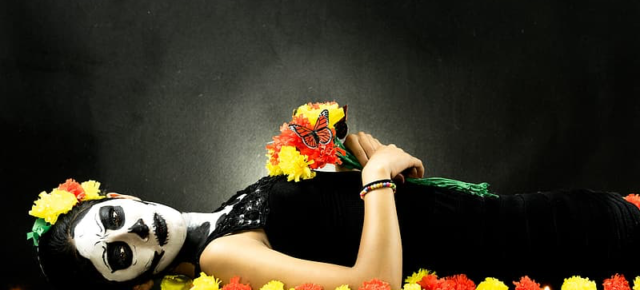
“You Want Me to Be Happy About Dying” — an essay by Ramona Grigg.

“You Want Me to Be Happy About Dying” — an essay by Ramona Grigg.

Reflections on life, afterlife, and the reality of the dark, dark passage. “Nothing in my life will be erased after I die.” Photo by the author. To most of you out there, I’m old. I’m so old, odds are I’ll probably die soon. You can think on that for a few seconds and move...
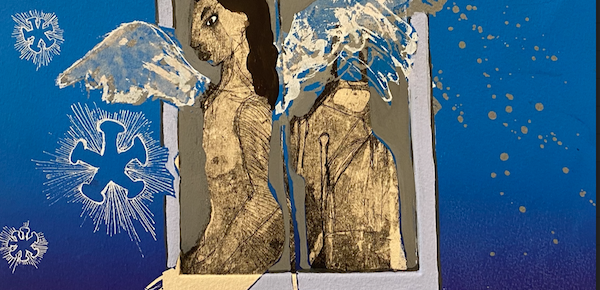
“The Politics of Art, 2020”: Our interview with Alexandra Blum, mixed-media artist.

“The Politics of Art, 2020”: Our interview with Alexandra Blum, mixed-media artist.

A pandemic and other global breakdowns inspire a visual journal of diverse styles and influences. “I think for me what is interesting about this series of work is the diversity of voices within myself.” “Vitriol.” Editors’ Note: Alexandra (Ali) Blum is a California-based artist who draws on influences from around the...
Taking Down the Confederacy in Richmond, Virginia: On Civil War monuments, graffiti art, and protest. Photos by John Moser. 

Taking Down the Confederacy in Richmond, Virginia: On Civil War monuments, graffiti art, and protest. Photos by John Moser. 

 The BLM movement is writ large on the Civil War monuments of the Confederacy’s former capital. And now some controversial statues are being removed. “We Just Want Justice,” protesters and graffiti at the base of the Robert E. Lee statue. Broad Street’s home is in Richmond, Virginia, where Jefferson Davis once presided...
From the COVID Journals of Lise Haines.

From the COVID Journals of Lise Haines.

On learning that she should sacrifice herself for the good of the public. pikrepo.com On the television this morning, an idea was floated with great sincerity. I could sacrifice myself for the public good. If anyone had to get sick or starve or die from a lack of oxygen, I was...
Latest entries
Art Imitating Life: Drones Appearing on Afghan Rugs

Art Imitating Life: Drones Appearing on Afghan Rugs

Here at Broad Street we are fascinated with the ways art reflects life—sometimes in surprising forms. The Atlantic recently ran a piece that showcases one such example. Cosimo Bizzari writes about a recent trend taken by Afghan rug-weavers: When it comes to what to depict on rugs, Afghan weavers traditionally turn to what’s most familiar. So in...
Contemporary Art as Crime - Part 2

Contemporary Art as Crime – Part 2

by Jamal Stone Contemporary art—art from the late 20th century to the present—often challenges preconceptions, stretching the boundaries of what is and is not art. But sometimes, definitions in the art world get too fuzzy—take, for instance, our understanding of art crime. Traditionally, art crime is simply crime committed against art, used to describe all sorts...
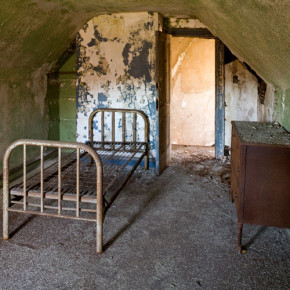
Typhoid Mary and the Public's Right to Health

Typhoid Mary and the Public’s Right to Health

  by Carla Dominguez Earlier this month, it was confirmed that there are more than 100 cases of measles in the United States—the largest outbreak in the post-vaccination era. An urban legend quickly circulated about a single unvaccinated woman who had traveled to Disneyland, spreading the disease. This misinformation fueled the dispute between those who choose to vaccinate themselves and their children...

Rafil Kroll-Zaidi's "Findings" Offers a New Take on the Facts

Rafil Kroll-Zaidi’s “Findings” Offers a New Take on the Facts

This week’s recommended weekend reading is the latest installment of the “Findings” column, a staple of Harper’s Magazine, originated by Roger Hodge in 2003 during his tenure at that magazine and currently written by editor Rafil Kroll-Zaidi. In this ongoing project, Kroll-Zaidi mines the pages of each month’s issue of the magazine for hard facts—one imagines...
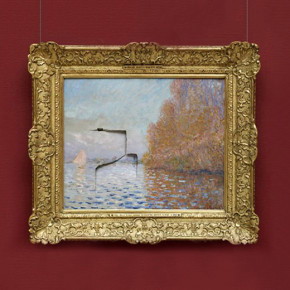
Contemporary Art as Crime - Part 1

Contemporary Art as Crime – Part 1

by Jamal Stone Contemporary art—art from the late 20th century to the present—often challenges preconceptions, stretching the boundaries of what is and is not art. But sometimes, definitions in the art world get too fuzzy—take, for instance, our understanding of art crime. Traditionally, art crime is simply crime committed against  art, used to describe larceny,...