Adieu, and Be Well ... Broad Street is now closed.

Adieu, and Be Well … Broad Street is now closed.

One last time, and forever, we thank all of our contributors, our readers, our boards, and our editorial staff over the last almost-decade. We had a great run and published so much of which we are deeply proud. We started laying plans in 2011 with a dream and a shoestring...
“You Want Me to Be Happy About Dying” — an essay by Ramona Grigg.

“You Want Me to Be Happy About Dying” — an essay by Ramona Grigg.

Reflections on life, afterlife, and the reality of the dark, dark passage. “Nothing in my life will be erased after I die.” Photo by the author. To most of you out there, I’m old. I’m so old, odds are I’ll probably die soon. You can think on that for a few seconds and move...
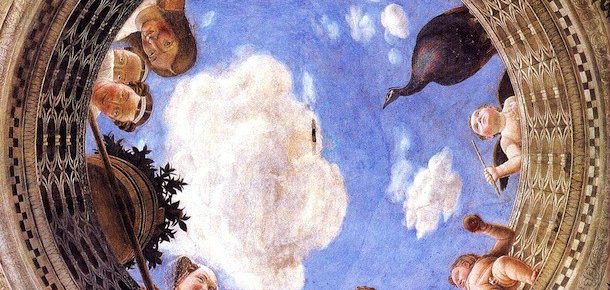
“The Politics of Art, 2020”: Our interview with Alexandra Blum, mixed-media artist.

“The Politics of Art, 2020”: Our interview with Alexandra Blum, mixed-media artist.

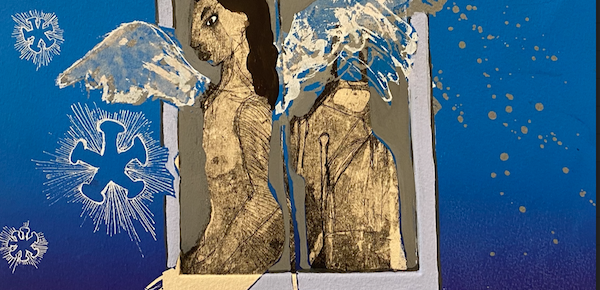
A pandemic and other global breakdowns inspire a visual journal of diverse styles and influences. “I think for me what is interesting about this series of work is the diversity of voices within myself.” “Vitriol.” Editors’ Note: Alexandra (Ali) Blum is a California-based artist who draws on influences from around the...
Taking Down the Confederacy in Richmond, Virginia: On Civil War monuments, graffiti art, and protest. Photos by John Moser. 

Taking Down the Confederacy in Richmond, Virginia: On Civil War monuments, graffiti art, and protest. Photos by John Moser. 

 The BLM movement is writ large on the Civil War monuments of the Confederacy’s former capital. And now some controversial statues are being removed. “We Just Want Justice,” protesters and graffiti at the base of the Robert E. Lee statue. Broad Street’s home is in Richmond, Virginia, where Jefferson Davis once presided...
From the COVID Journals of Lise Haines.

From the COVID Journals of Lise Haines.

On learning that she should sacrifice herself for the good of the public. pikrepo.com On the television this morning, an idea was floated with great sincerity. I could sacrifice myself for the public good. If anyone had to get sick or starve or die from a lack of oxygen, I was...
Latest entries
Five Etymologies that May Change the Way You Think About Literature

Five Etymologies that May Change the Way You Think About Literature

Did you know that the words ‘fiction’ and ‘dough’ are closely related? Read on to find out how, and for more eye-opening information about the origins of common literary terms.  1. Scene It probably doesn’t surprise you that before the word ‘scene’ was applied to literature in general, it was solely a theatrical term that meant the...

Irish Storytelling: Broad Street Runs Through It

Irish Storytelling: Broad Street Runs Through It

Ireland’s 1976 Tidy Town winner, “Ireland’s Best Kept Town,” casts its Broad Street past thatched-roof cottages. The rural homes of Adare in Limerick County maintain the same thatched style of a century ago (see the pictures below). Gathering wheat straw, reeds, heathers and sedges into thick clumps, the townspeople built their thatched roofs to be resistant to quickly spreading...
Truly Embellished Nonfiction

Truly Embellished Nonfiction

Nonfiction writers and readers are no strangers to the dialectic between those who think there is room in nonfiction for embellishment, and those who disapprove of any kind of fact-bending. At the heart of the debate seems to be a disagreement of what it means for a story to be true. Is a story true...
Do Stories Benefit Us?

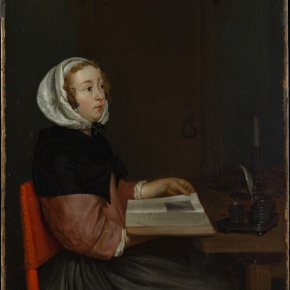
Do Stories Benefit Us?

The common sentiment among writers and readers is that stories are good for us, and many would say that we need stories. Tim Parks explores this idea for the New York Review of Books blog. Why do we claim that stories benefit us, or fulfill a need? Is it because they allow us to find ourselves in an...
The Sheldonian's Laughing Head

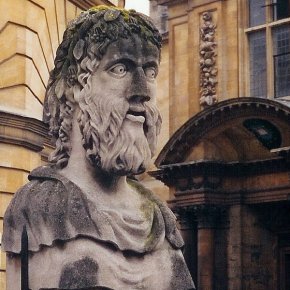
The Sheldonian’s Laughing Head

”Here in Oxford, exposed eternally and inexorably to wind and frost, to the four winds that lash them and the rains that wear them away, they are expiating, in effigy, the abominations of their pride and cruelty and lust. Who were lechers, they are without bodies; who were tyrants, they are crowned never but with...